PHP или Python, что лучше учить для Web разработчики в 2020
В этой статье разберём, какой же язык программирования учить в 2019 году, PHP или Python, думаю многим кто сейчас стоит перед выбором, что учить для beck-end разработки, эта статья будет интересна.
Процесс изучения:
Один из важнейших факторов выбора языка, насколько просто его изучать и оба языка учить достаточно просто, но PHP всё же проще и сейчас объясню почему.
PHP:
Язык PHP вообще не делался как язык программирования, изначально он был скриптовым языком, сделанный на perl для быстрого создания web страниц.
Поэтому его учить очень просто, и уже через пару недель изучения вы сможете сделать свой блог, но отсюда появляются ряд проблем, к примеру, с ООП работать не очень комфортно, только в седьмой версии это подправили, ну и скорость работу у него достаточна медленная.
Python:
С Python всё сложнее, он не был сделан для того что бы делать back-end, из за чего вам придётся сначала изучить сам язык, а потом web фреймворк, например Django.
Сам же язык в принципе не очень сложный, вы его достаточно быстро и просто изучить, но этого не достаточно, что бы делать сайты, и только после того как изучите фреймворк, вы сделайте сайт, но на это может уйти не пару недель а пару месяцев.
Работа на фрилансе:
Это пожалуй одна из самых важных тем, которые могут повлиять на выбор языка, так как, не все хотят работать в офисе.
PHP:
Для фриланса этот язык пожалуй идеально подойдёт, так как, там наверное 90% заказав, это работа с различными CMS системам, которые как раз работают на PHP.
Хотя есть одна не большая проблема, раз и заказов много, то конкуренция очень большая, и в основном заказчики предпочитают нанимать уже тех, которых знают.
Поэтому конкурировать будет достаточно трудно, но за то, если получится, то вы быстро начнёте работать.
Python:
С ним всё интереснее, так как изучать его всё таки сложнее, чем PHP, то людей которые его знают меньше, но спрос на него растёт, соответственно платят за заказ гораздо больше.
Поэтому, если вы всё таки изучите его, сможете относительно легко начать работать и за более большие деньги.
Работа в офисе:
Здесь всё по интереснее, чем на фрилансе, но расскажу всё кратко, потому что тут особо нечего рассказывать, кроме статистики, количество вакансий смотрел на HeadHunter, а статистику по средним ценам на trud.com.
PHP:
У этого языка достаточно много вакансий, около 1500, это по Москве, но средняя зарплата по России окала 64000 рублей на июль 2019 года. что достаточно много, на мой взгляд.
Python:
C Python всё не много лучше, чем c PHP, там уже вакансий по Москве окало 2900, а средняя зарплата окало 74000 рублей на июль 2019 года, это по всей России.
Вывод:
Так что же лучше учить PHP или всё таки Python, ну как можете видеть, единственный плюс языка программирования PHP, это его простота, и всё, конечно, вы быстрее выучите и быстрее начнёте зарабатывать, но на мой взгляд, лучше больше потратить времени на изучения, и больше зарабатывать, чем на оборот, поэтому учите Python.
Также если хотите работать на фрилансе, то тут можно подумать и о PHP.
Но если всё таки решили учить PHP, то крайне рекомендую прочитать эту статью: Как выучить язык PHP с нуля и максимально эффективно.
Python vs PHP in 2023
Backend development is one part of the two-part harmony that is web development, and it is a highly sought-after skill in the market. Almost any new business/startup needs a website and a mobile app — both of which connect to a server in the backend.
As such, backend developers are in high demand and companies are willing to throw large sums of money to developers who have the necessary skills and experience. In this post, we’ll cover the differences between PHP vs Python, two programming languages that are used for backend development.
But before we examine the finer details of Python vs PHP, let’s take a look at what the programming language choices are for backend development, and a brief overview of both Python and PHP. If you’d like a quick glimpse of how the two stack up, there’s a table below that covers the essentials.
Python vs PHP for Web development: Summarized
Ease of Learning
Easy to learn. Many beginners pick Python as their programming language.
Not developed as a general-purpose language, but fairly easy to learn
Excellent community support
Excellent community support
Exceptionally well-developed library support for almost all types of applications
Vastly fewer libraries,, Packagist being a notable library
Database integration is not as strong as that of PHP
Provides access to more than 20 different databases
Can be slow depending on the application
Django, Flask, Pylons, Pyramid
Codeigniter, Zend, Laravel, Symfony
PDB (Python Debugger)
XDebug package for debugging
Programming Languages for Backend Development
Now before we look at some criteria in analyzing PHP vs Python, let’s take a look at programming languages in general. Specifically, we’ll look at various languages, including Python vs PHP for backend development.
For new developers, the question of which backend framework to learn is always a matter of confusion. With so many new programming languages offering so many features, libraries, and frameworks, how does one actually decide on which web framework to learn?
The following is a brief summary of the various programming languages for backend development.
- Python: One of the most popular choices of backend programming. It is relatively new and has enormous library support
- PHP: PHP has been in the market for a long time and is still widely used. For example, Facebook has its substantial backend developed in PHP in the initial days
- JavaScript: With powerful web frameworks like NodeJS, JavaScript has captured a huge chunk of the market and emerged as one of the most popular backend programming languages
- Ruby: Ruby on Rails is another popular web development framework and several startups use it
- .NET: Microsoft’s .NET framework was initially more of a proprietary one, but the company has been open sourcing it as of late. It is mostly used in enterprises because of its Microsoft backing.
What is Python?
- Comprehensible syntax that is also easy to debug and easy to maintain
- Runs on various platforms as it is a portable language
- Many prebuilt libraries, which makes development easier
- Python is developed in a way that it can internally deal with memory addresses and garbage collection
- Has an interactive shell that helps developers test the things before implementation
- Database friendly and offers database interfaces to all major commercial DBMS systems
- Supports GUI applications and has a framework for Web. Example: tkmter, WXPython, Django
- Comparatively high memory consumption
- Functional programming can be less than ideal
- Dynamically typed, which can result in runtime errors
- Python for mobile development isn’t the best choice
Developed by Guido van Rossum and released in 1991, Python is an interpreted high-level functional programming language. Python has its uses in web development, software development, and system scripting. It is a favorite of many programmers and data scientists as it offers features like support for different platforms, the ability to run on an interpreter, and English-like syntax.
Although Python has an ample number of uses, the most popular ones relate to web application creation, database systems reading and modification, big data analysis, and complex mathematical calculations.
Recommend Python Course
Features of Python
- A beginner-friendly language
- Python can be executed on various platforms using the same interface
- Low-level modules can be included in the Python interpreter
- Python provides support and an ideal structure for large codebases.
- Automatic garbage collection
- Python offers interactive testing and debugging sessions
- High-level dynamic data types are offered and also supports dynamic type checking
- Integrates with Java, C, and C++
What is PHP?
- Supports several Operating Systems, including Windows, Unix, Linux, and Mac OS
- Compatible with almost all servers
- Supports a range of databases
- Works efficiently with databases
- Efficient unit testing
- Open-source
- Weakly-typed language
- Unsuitable for large-scale content-focused web applications
- Difficult to modify core behavior
- Extra features can impact performance
Created by Danish-Canadian programmer Rasmus Lerdorf in 1994, Hypertext Preprocessor, aka PHP, is a widely used, open-source scripting language. PHP is capable of generating dynamic page content, and can create, open, read, write, delete, and close files on the server. It can also collect form data and also can send and receive from cookies.
Additionally, PHP is database friendly and can add, delete, and modify data in the database. It can also be used to control user access and to encrypt data.
Features of PHP
- One of the easier scripting languages
- Supports many databases, such as Oracle, MySQL
- More efficient compared to other scripting languages, e.g. ASP and JSP
- Has predefined error reporting constants to generate an error notice or warning
- Offers access logging by creating a summary of recent accesses of the user
- Open-source
Is Python or PHP Easier?
Opinions on this question can vary, and both languages are similar in learning difficulty. There’s a lot of context that goes behind answering these sorts of questions when it comes to programming. Are you moving from PHP to Python or starting from scratch? What is your target purpose?
For web application development, PHP may be better as it is designed for that, but Python isn’t so difficult that you should dismiss it.
The bottom line, as far as learning difficulty goes in Python vs PHP, it is fairly matched, so focus on what you want to build and work on.
Should I Learn PHP or Python in 2023?
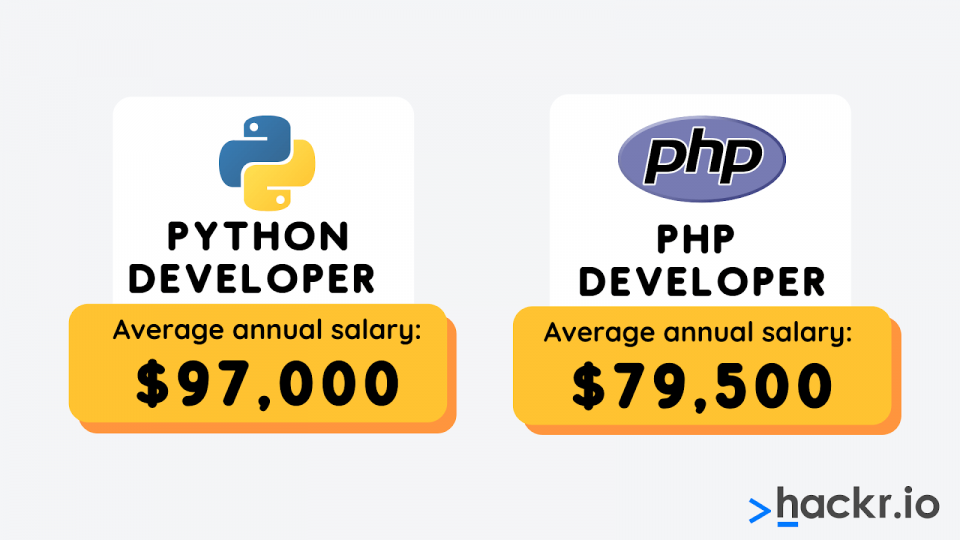
The answer to this question is a lot more straightforward: Python is a better language to learn in 2023. It pays more and the job opportunities are far more plentiful.
The median annual salary for Python developers in the US is around $97,000. For PHP developers, the average annual salary is around$79,500.
Can PHP be Replaced by Python?
No. They both have their own uses, and perform some tasks better than the other. Python is better suited for many applications, but it may be more resource-efficient to use PHP for some web application target purposes. In terms of web application development, the difference between PHP and Python comes down to what you are trying to build.
Should I Learn PHP or Python First?
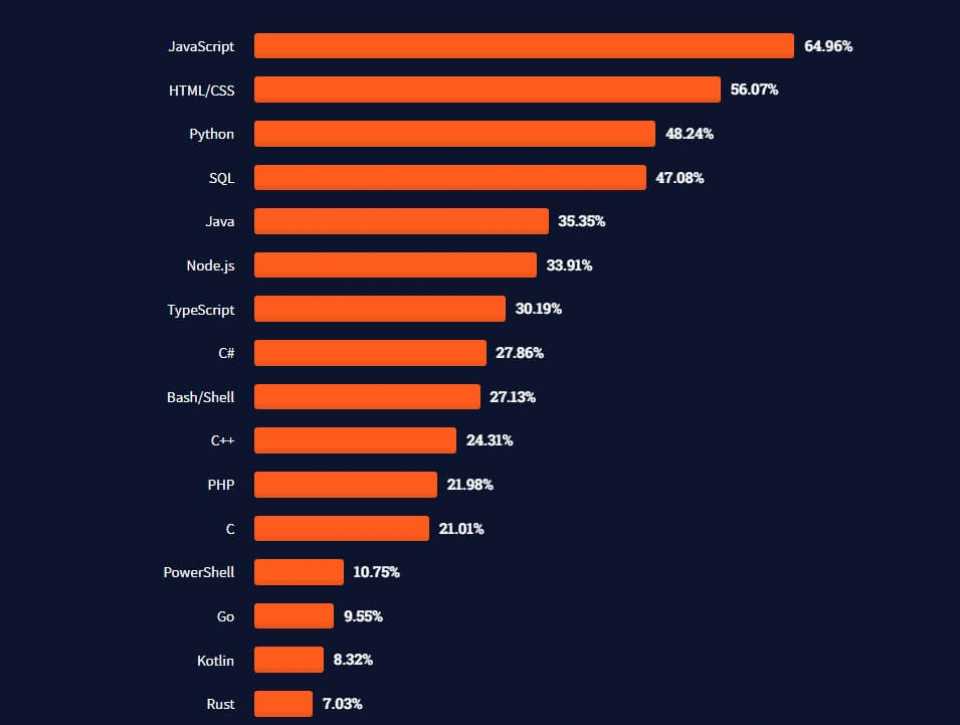
Most popular languages, as surveyed by StackOverflow
This depends on what your goal is. If you’re looking to learn your first programming language, then Python may be a better choice because the salaries are better and it is one of the most popular programming languages.
Python vs PHP
Now that we have a basic understanding of both Python and PHP, let’s take a look at how they fare against each other based on essential criteria that goes into picking a language. With this, we’ll get a better understanding of which is better, PHP or Python.
Ease of Learning — Python Wins
Python is easier to learn, though PHP is not difficult. Python is a general-purpose programming language, and can be picked up very quickly. Python programs are much shorter and easy-to-write as compared to other programming languages and as a consequence, it has become a preferred choice for a lot of applications. The syntax is comparatively much simpler and the code extremely readable.
PHP isn’t meant to be a general-purpose language. It was designed specifically for web applications which are definitely more sophisticated than simple, stand-alone programs. As a result, it could take more time to learn PHP than it takes to learn Python. Having said that, PHP isn’t particularly difficult itself.
Community Support — Tie
Python and PHP, both have excellent community support.
PHP has been in the market for quite a while, particularly for developing web applications. As a result, there is a large community of PHP developers that can provide support.
Python is the same here. Community support is outstanding.
Python became popular when Google started using it for apps like YouTube. Many powerful startups like Instagram, Pinterest, and Reddit also use Python-based web applications.
Having said that, it must be noted that the world’s largest social network, Facebook, has been written using PHP as the primary backend.
Documentation — Tie
Extensive documentation is available for both programming languages. There are innumerable websites, forums, and discussion boards that provide excellent tutorials on how to develop applications using Python or PHP.
Pricing — Tie
Python and PHP are both completely free and open source. Both win here as well. In fact, both Python and PHP here win significantly over other paid web frameworks.
Library Support — Python Wins
Now, this is one point where Python significantly beats PHP. Python has exceptionally well-developed library support for almost all types of applications. PHP lags here, but Packagist (PHP packages repository) is a strong backbone holding PHP.
Currently, many startups and even large organizations are developing Machine Learning backed web applications. Python provides some excellent Machine Learning libraries like TensorFlow, Keras, Theano, Scikit Learn, etc. These libraries are fast, easy-to-use and, most importantly, they integrate brilliantly with the web framework. As a result, developing such types of applications using Python is far simpler as compared to almost any other programming language.
Speed — Tie
This one is a tie because it depends on context.
PHP 5.x versions were quite slow, taking a lot of time in execution. However, the latest major release, PHP 8.1, is much faster — almost 3 times faster than a typical Python program.
Speed often becomes an important factor in performance-critical applications. For instance, in a core banking system that gets a million hits on a daily basis, a delay of 3 times might create a significant impact on the overall system performance. Therefore, talking about speed, PHP wins by a significant margin over Python.
However, it has to be noted that for most simple applications, the scale is quite low and so, there is not much of a noticeable time lag. For instance, for all practical purposes, 10 milliseconds is not much different from 30 milliseconds given that the application isn’t latency-critical.
Choice of Web Frameworks — Python Wins
Python and PHP are both quite close on this point given that both provide equally good choices. New developers, however, enjoy using Django given that the development time in Django is quite low and it is easy to set up.
The most commonly used Python-based web frameworks are Django, Flask, Pylons, Pyramid, etc. The most used PHP based web frameworks are Codeigniter, Zend, Laravel, Symfony, etc.
Django is known to be extremely fast, scalable, secure and easy-to-use. It is quite robust and powerful and is used widely in a large number of applications. Similarly, Codeigniter and Laravel are very widely used in the market and almost all PHP applications today use one of these two frameworks.
Debugging — Tie
Python provides a powerful debugger called PDB (Python Debugger). PDB is well documented and is easy to use, even for beginners. PHP, on the other hand, provides the XDebug package for debugging. Both PDB and XDebug provide the most commonly used debugging features — breakpoints, stacks, path mapping, etc.
Both Python and PHP are similar here, and none is a clear winner.
Should You Learn Python or PHP in 2023?
To summarize, for most points, both Python and PHP are similar to each other. But Python wins on some critical factors. On top of that, the median salaries for Python are higher, as are the job opportunities.
So, in many ways, Python is a winner over PHP, and the question of PHP vs Python is kind of moot. But here’s what we would recommend:
- If you are an experienced PHP programmer, stick to PHP since you already know it in and out. PHP certifications may help.
- If you are an intermediate programmer, moving from PHP to Python shouldn’t be difficult. You might want to learn Python and shift to it for better job opportunities.
- If you are a novice programmer who wants to learn backend development, start learning Python and eventually move to Python-based frameworks.
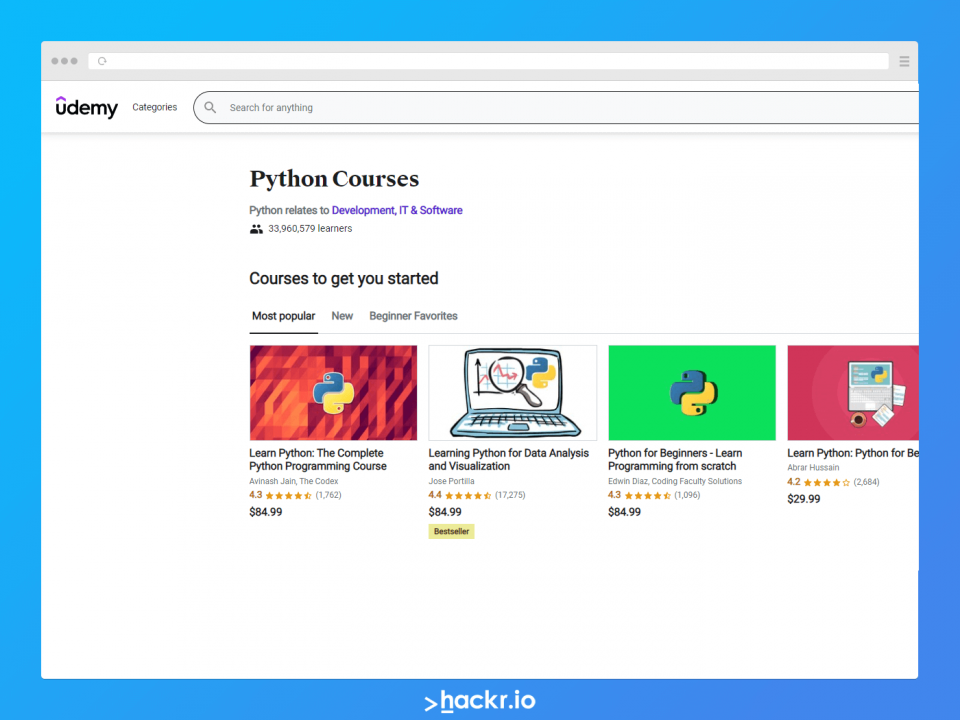
Python Courses To Get You Started
Whatever you decide, good luck!
People are also reading:
- Best Python Certifications
- Best Python Courses For Beginners
- Best Python Compilers
- Best Python Interpreters
- Best way to learn python
- How to Run a Python Script
- Top PHP Interview Questions
- Top PHP Alternatives
Python и PHP: сравниваем возможности
Никогда не задумывались о том, что общего у языков Python и PHP? Сайт proglib.io рассказал, какие характеристики у них сходны, а какие отличаются.

PHP – титан скриптовых языков, на котором работает 79% всех существующих сайтов. С другой стороны, на Python приходится основная доля интернет-трафика: на его чаше весов такие гиганты, как Amazon, Google, Reddit и Instagram. Попробуем разобраться в сильных и слабых сторонах этих языков с точки зрения веб-разработки… не холивара ради, а эрудиции для.
Сложность освоения
Одна из ключевых характеристик любого языка программирования. От того, как функциональные возможности соотносятся с удобством использования, зависит приток новых программистов, а значит и развитие той или иной экосистемы. Кроме того, чем проще язык, тем меньше времени уходит на разработку приложений, а это прямо влияет на стоимость продуктов.
По этому параметру Python обходит большинство, если не всех своих конкурентов. Именно этот язык рекомендуют учить в качестве первого, именно его синтаксис приводят в пример, когда речь заходит о прозрачности и удобстве кода. С другой стороны, PHP никогда не стремился нравиться новичкам: один тот факт, что его первые скрипты выросли из C, уже говорит о многом. Сегодня, когда веб-приложения превратились из простеньких утилит в грандиозные программные решения, сложность PHP отпугивает многих разработчиков.
Скорость работы
Одна из главных претензий противников Python – его медлительность. И действительно, PHP 7 разносит Python 3 в бенчмарках. Это означает, что серверные приложения тратят больше ресурсов, и при высокой нагрузке – возьмём для примера веб-приложение с миллионом ежедневных посещений – разница производительности действительно скажется на показателях проекта.
В защиту Python стоит сказать, что до определённой границы отставание будет микроскопическим. Если PHP-приложение выполняется за 10 мс, а программа на Python – за 30 мс, то трёхкратной разницей в производительности можно пренебречь. Решение остаётся за разработчиком, который выбирает нужный фреймворк по условиям конкретной задачи.
Поддержка комьюнити
Все мы идём в Интернет, когда у нас возникают вопросы – как в личной, так и в профессиональной жизни. И каждому знакомо это чувство, когда на третьей странице выдачи наконец обнаруживается ссылка на страницу с нужной информацией… а браузер показывает ошибку 408. Живое сообщество разработчиков, которые обмениваются опытом – обильно сдобренным профессиональными колкостями – страховка от таких ситуаций.
И PHP, и Python по этому параметру находятся примерно на одном уровне. Первый держится за счёт более чем 20-летней истории, в пользу второго играет статус «рок-звезды» среди языков программирования. Правда, понять ответы Python-профессионалов может быть проще, поскольку сам язык дружелюбнее к новичкам. Ещё один плюс – огромное количество разнообразной документации на все случаи жизни.

Спектр доступных библиотек
Логичное продолжение предыдущего пункта. Чем больше программистов работает с тем или иным языком, тем больше они создают новых функциональных модулей. Это расширяет его возможности, отчего язык привлекает новых адептов… в общем, вы поняли.
На этом поле Python держит уверенное лидерство: его Django стал эталонным фреймворком для веб-порталов всех мастей; CherryPy прямо из коробки предлагает полный инструментарий для создания веб-приложений на базе собственного мультипотокового сервера; есть решения для машинного обучения и работы с большими данными. Библиотеки PHP отстают по функциональности и удобству использования, и это признаёт большинство программистов.
По этой причине порог входа в Python для веб-разработки не слишком высок. Для начала достаточно понять логику языка и освоить несколько лучших фреймворков.
Отлов ошибок в коде
Ещё один показатель, который сильно влияет на стоимость разработки: как быстро в программе можно найти баги и узкие места. Меньше ошибок – меньше работы тестировщикам – больше ROI. Про пользователей тоже не стоит забывать: чем быстрее разработка, тем быстрее появляются новые функции, которые привязывают людей к продукту.
И у Python, и у PHP есть собственные дебаггеры: PDB (Python Debugger) и XDebug соответственно. Оба дебаггера обеспечивают вывод пути до обнаруженной ошибки, визуализацию параметров производительности и другие функции ежедневной необходимости. В этом отношении среди языков нет явного лидера.
Подсчет очков
Итак, в нашем сравнении Python победил в двух номинациях, PHP – в одной, ещё два раунда закончились вничью. Напрашивается вывод, что в этом столкновении нет чистого победителя. Если вы уже маститый PHP-разработчик, этот язык закроет все ваши потребности, да и в ближайшие годы без работы вы точно не останетесь. Нужно ли погружаться в новый язык, зависит от ваших целей и возможностей.
Если вы программист со стажем, но без особых карьерных перспектив, Python может открыть вам множество новых дорог. Возможность писать код как книгу позволяет мозгу больше инвестировать в креатив и работать над новыми идеями. Не побоимся повториться – начинающему программисту стоит прежде всего освоить именно Python. После этого можно продвигаться по уровням сложности как душе угодно.
Важно понимать, что Python – не просто модная игрушка, а мощный инструмент, с помощью которого можно создать как небольшую утилиту для упрощения отдельного процесса, так и масштабный сервисный портал с миллионами посетителей в сутки. Если вас будут убеждать в обратном – улыбнитесь и откажитесь от холивара.
Предыдущая статья Как сделать хороший пул-реквест
Следующая статья Оператор UPDATE в SQL: разбираем на примерах
techrocks.ru — качественный контент, созданный инженерами для инженеров
СХОЖИЕ СТАТЬИБОЛЬШЕ ОТ АВТОРА
Книги по Go для профи и начинающих
Пожалуйста, не пишите запутанные условия!
Декораторы Python — объяснение для начинающих
Бинарный поиск на Python
Временная таблица в базе данных SQL
5 КОММЕНТАРИИ
- Алексей 09.08.2021 at 12:41
Мда, про дебаггинг вы, конечно, загнули. В 7.4 пыхе добавили типизированные параметры и функции (точнее тип определение типа возвращаемых данных для них), что на порядок снижает вероятность ошибок. Плюсом, ООП в питоне по сравнению с php мягко говоря, кастрированное, если вы писали на пыхе, поймёте. Про фреймворки сложно согласиться, так как есть прекрасные примеры в виде Laravel и Yii.
- Алексей 09.08.2021 at 12:42
P.S. в скобочках «точнее определение типа возвращаемых данных для них[функций])»
Забавно, но человек после python, будет немного шокирован, при переходе на php, js, java, c#, c++, c.
В принципе, забавная тенденция, рекламировать python ( который почти что уникальный по синтаксису [ сори, возможно про какие то языки забыл, я сравнивал с теми что описаны выше + Go ] ), везде где только можно, по аналогии с node.js и сравнивать со всем подряд не углубляясь в подробности, так по верхушке прошлись и все.
Не то чтобы человеку хотелось переходить с python, на другой ЯП, но сидеть в песочнице с одним языком, ну очень скучно. Это как играть в одну и ту же компьютерную игру. А большинство языков то с синтаксисом c.
Забавный факт: до 2018-2019 про php говорили как язык с наименьшим порогом входа, а теперь таковым называют python.
Хотя если сравнивать документации, если сравнивать названия функций и что они делают, то можно задуматься.
«Спектр доступных библиотек — На этом поле Python держит уверенное лидерство: его Django стал эталонным фреймворком для веб-порталов всех мастей» — эмм… а куда же подевались WordPress (на котором, кстати, данный сайт написан, а не на эталонном Django почему-то) и Laravel вместе с Symfony?
С чем я соглашусь, так это с тем, что решения для машинного обучения и работы с большими данными в Python развиты намного лучше. Но тут уж стоит учитывать специфику. PHP — он же в первую очередь для web разрабатывался (и продолжает разрабатываться), а всё остальное на нем — удел увлеченных энтузиастов.
Так что, в вопросе библиотек, как раз стоит сузить круг. Зависит от вашей задачи. Если брать чистый веб, то результат не так уж и однозначен. Если же брать все остальное… ну, не знаю, давайте посмотрим как на Python микроконтроллеры программируют.
- Саша 09.09.2021 at 22:52
«Итак, в нашем сравнении Python победил в двух номинациях, PHP – в одной, ещё два раунда закончились вничью.» — а почему у этих номинаций один и тот же вес?
Приведу пару примеров:
— для веб-разработки не имеет значения сколько библиотек машинного обучения у питона, зато будет важна скорость работы под нагрузкой
— для машинного обучения, как раз, на второй план отходит скорость работы, но выходят на первый библиотеки
— для обучения программированию в самом широком смысле важно как раз сочетание большого комьюнити, порога вхождения и того, насколько широк спектр задач, решаемый языком В общем, как и в любом сравнении совы с глобусом приходим к тому, что нужно выбирать инструмент под задачу.
PHP vs Python: Features & Comparison for 2024

- By Rajnish Kumar Sharma
- |
 12 MIN READ
- |
 Updated: April 3, 2023

Table of Contents
Summary: There’s fierce competition between PHP and Python in web application development. Can’t decide which one you should use among PHP vs. Python? Check out this detailed guide.
In today’s highly disruptive technology world and ever-evolving web development solutions, PHP and Python are the most popular server-side languages most businesses prefer. However, choosing a side in the “PHP vs. Python” debate isn’t easy. While many websites are programmed in PHP, Python has seen a steep upward trend over the past two years.
If you’re wondering whether Python development suits your project or if you should stick to PHP, you’ve come to the right place.
We’ll open the post with some basics about the two languages. Then, we’ll proceed to the comparison, in which we’ll evaluate PHP and Python across various factors, such as
- Speed to Market,
- Security,
- Performance,
- Versatility,
- Scalability,
- Ease of installation,
- Debugging
- Web framework options,
- Environment Management,
- Developer Community & Support
- Documentation

We respect your privacy. Your information is safe.
PHP vs. Python: The basics
What is PHP?
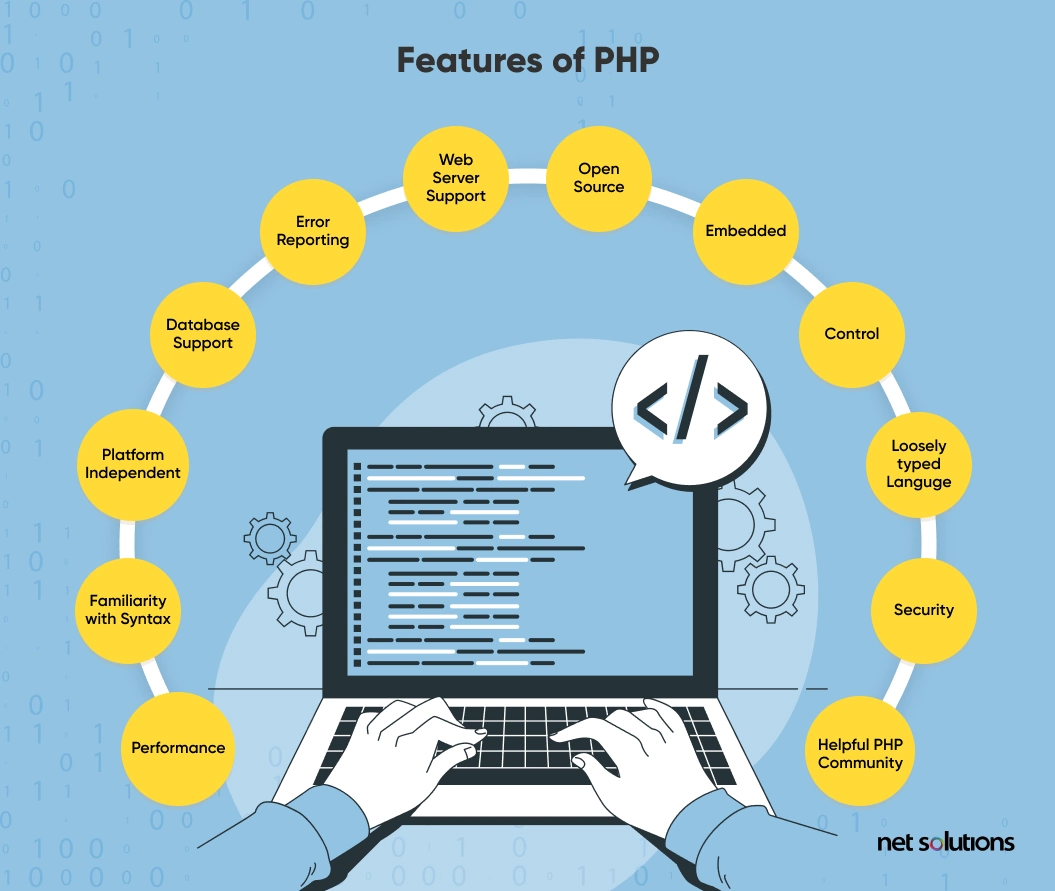
PHP is a scripting language first released in 1994 by Rasmus Lerdorf. Though most commonly used for web development solutions, PHP is a multi-purpose programming language. The name of the language initially stood for “Personal Home Page.” Later, it became a recursive acronym meaning “PHP: Hypertext Preprocessor.” Over the years, PHP has become one of the most popular technologies used in web development, though its design has attracted some criticism.
- PHP is open-source, which means anyone can download and use it to accomplish their web development goals. Also, developers worldwide can inspect the code, post errors, or contribute to bug fixes.
- PHP is simple and easy to use compared to many coding languages. Since the syntax is similar to the C language, anyone can get along.
- You can seamlessly integrate databases like Oracle, PostgreSQL, and MySQL with PHP.
- PHP offers cross-platform compatibility, which means you can run it on almost all operating systems and devices.
- The flexible nature of PHP allows you to integrate it with JavaScript, XML, and HTML easily.
- PHP performs faster than many scripting languages, such as ASP.NET, JSP, and PERL.
Besides these basic features, Python also offers PDO class, regular expressions, magic constants, command-line execution, and support for cookies.
What is PHP used for?
PHP is used to build dynamic and interactive websites and web applications. Some popular websites built on PHP are WordPress.com, Wikipedia.org, Facebook.com, Zoom.us, Canva.com, and Microsoft.com. According to W3Techs, around 77.5% of all websites use PHP.
Besides, PHP is also used to build RESTful APIs, SOAP web services, and data processing and visualization.
What is Python?
Python is a multi-purpose, high-level programming language. It was first released in 1991 and initially developed by Guido van Rossum. Over time, Python has become one of the most popular programming languages, adopted by many tech industry household names. Programmers can leverage Python for web development by using frameworks—such as Django, Flask, and Web2Py.
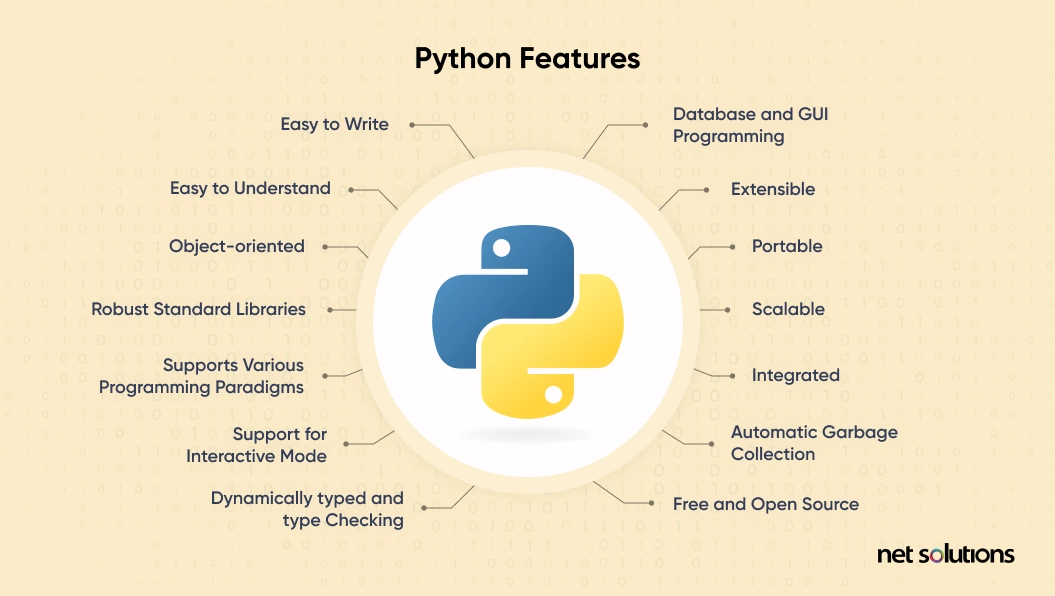
Python is a universal language. Through the years, developers worldwide have contributed to the Python ecosystem, creating several tools and libraries to solve problems over various domains.
- Since Python is open-source, anyone can download and use it for free. Also, developers can use and modify the publicly accessible source code of Python based on their needs.
- Python is easier to learn than other programming languages, such as Java, C, C++, and JavaScript.
- As an object-oriented programming language, Python lets you access features like object encapsulation, construct and destruct, and classes.
- Python is an extensible language. It means you can write Python code in C++ and compile it without any hassle.
- Since Python codes are executed line-by-line, debugging is much easier and less time-consuming.
- Python code is portable, which means if you’ve written Python code for Windows OS and want to run it on other operating systems, you can do it without changing the code.
What is Python used for?
Here are some simple use cases of Python:
- Web Development: Python has frameworks like Django and Flask, which lets users build web applications quickly and efficiently.
- Data Science and Analytics: You can use Python libraries like NumPy, Pandas, and SciPy for data analysis, visualization, and machine learning.
- Artificial Intelligence and Machine Learning: Developers prefer Python for building complex AI and ML models because of its simplicity and readability.
- Scripting: You can also use Python for automation and scripting tasks like system administration, network programming, and automated testing.
- Game Development: Python has libraries like Pygame that let you quickly develop 2D games.
- Desktop Application Development: You can use Python frameworks like PyQT and wxPython to build cross-platform desktop applications.
Python vs. PHP: An in-depth comparison
1. Speed to Market
What new currency sets a business on the path to success, you ask? Time is the answer.
In today’s highly digitized world, businesses continually look to speed up their digital transformation journey. It would be best to build an MVP as soon as possible to raise funding for further new product development. And this is the primary reason you must choose the correct language for your web application.
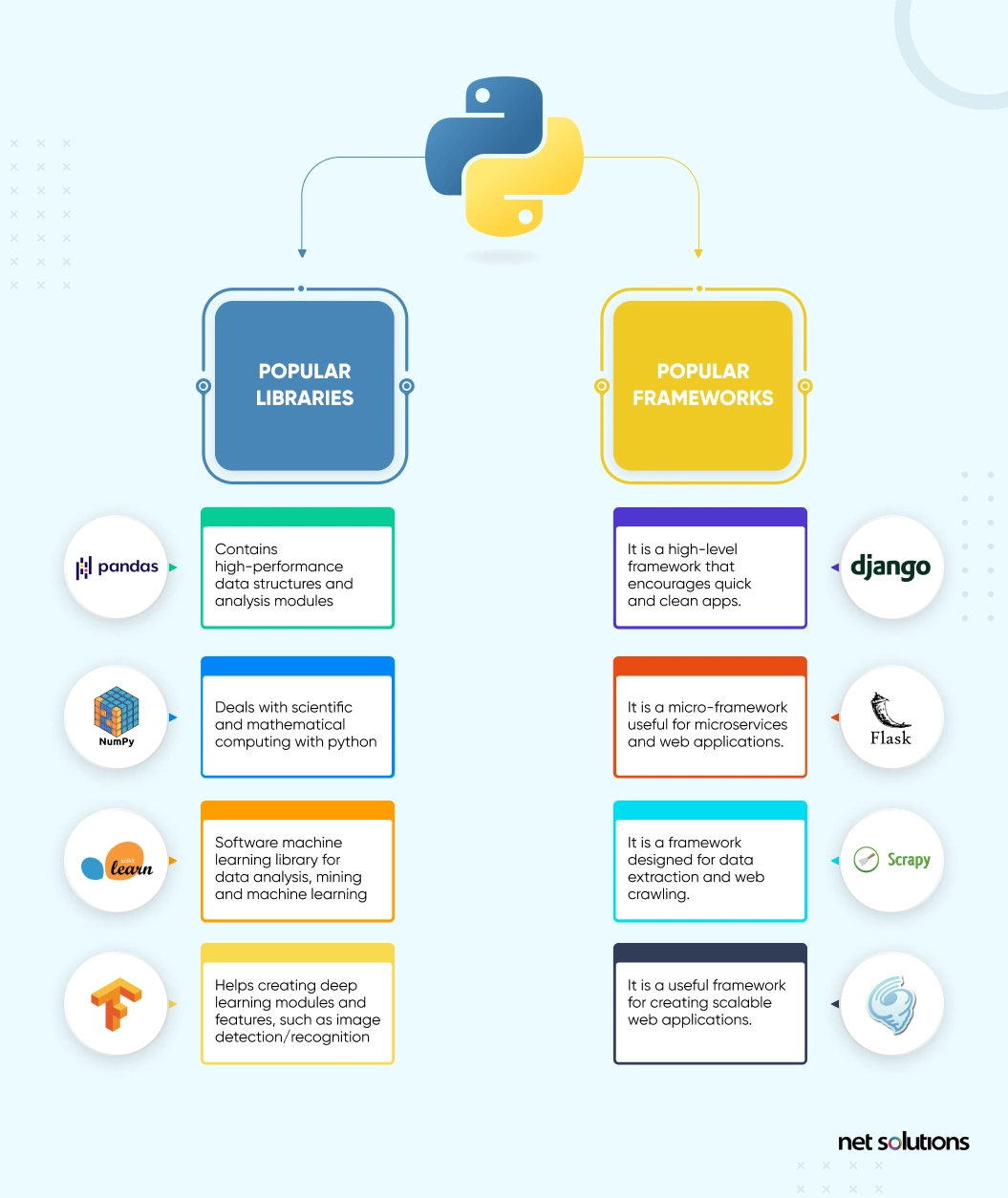
As its official website quotes, Python is “powerful… and fast….”
Python has an excellent set of third-party libraries, modules, and packages to complete projects faster. For instance, Django is one of the most famous frameworks for web development written in Python. It leverages the MVC (model-view-controller) pattern to allow developers to create applications with excellent separation of concerns and reusability quickly.
PHP also comes with its tools, including libraries and frameworks. In the PHP camp, the most popular framework is Laravel, which also adopts the MVC pattern and comes pre-packaged with many valuable features for development, such as authentication, routing, templating, and more.
Verdict: For this criterium, we have a draw.
2. Security
Security Vulnerability goes in tandem with the web development process. Here are the reasons why:
- Web development is a rapidly-evolving field where new technologies and frameworks emerge. As a result, it becomes challenging for developers to keep track of the latest security threats and take steps to mitigate them.
- Sometimes, the emphasis may be more on functionality than security. As a result, some security vulnerabilities may slip into the web application that attackers may exploit.
- Human errors, like failing to sanitize user input, can result in serious security vulnerabilities.
The cost and time to fix these vulnerabilities increase exponentially as you progress through the software development lifecycle (SDLC).
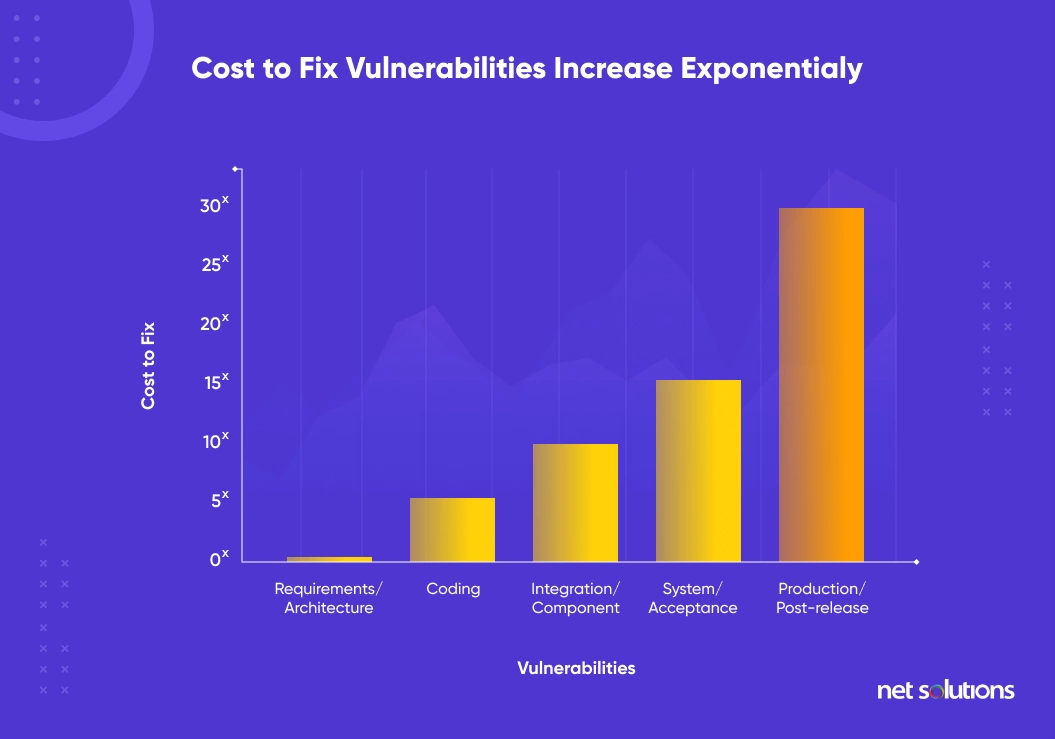
The graph indicates that it is 30x times more expensive to get rid of vulnerabilities during the post-production phase than during the design, requirement identification, and architecture stage.
Regarding security, Python is the most recommended choice for businesses. For instance, the Django framework comes up with built-in security features, which help in protecting the application from various security threats.
Moreover, as per WikiLeaks, numerous government agencies like the CIA rely (heavily) on Python as their secret hacking tool. Apart from the CIA, various other US organizations that store sensitive data use Python as their backend language: the Department of Education, the Department of the Navy, and the National Institute of Standards and Technology (NIST), to name a few.
On the other hand, PHP has had a frightful history regarding security. Although most of the security issues have been addressed due to robust community support, PHP fails in terms of security compared to Python.
3. Performance
Application/Website speed is a vital factor that helps determine its performance and fluidity. A Google study says that 53% of mobile site visits leave a page that takes longer than three seconds to load. Today’s era of experience relies on speed: releasing software to production multiple times a day is critical.
Python, as we mentioned, is fast and powerful. The Just-In-Time compiler of Python makes it faster than its competitor, PHP. One of the main advantages of JIT is that once the files are compiled, they are not needed to be recompiled.
On the other hand, PHP’s earlier versions, PHP 5.x, were much slower than Python’s. However, the release of PHP 7.x brought a turnaround, improving applications’ speed significantly. With PHP 7, Zend Engine 3.0 was released, making PHP 7 twice faster as its predecessor.
Verdict: The winner is PHP. All credits go to Zend Engine 3.0 of PHP 7. However, it’s important to mention that PHP defeats Python just by a marginal difference.
4. Versatility
Nowadays, web applications are more than just developing simple portals or websites for information. Instead, AI is also becoming an essential part of the web and other emerging technologies. All businesses with online customer service portals use advanced AI and machine learning algorithms.
Such algorithms help businesses identify their users more accurately, coupled with machine learning, and identify specific domains of their business that they should funnel their investments.
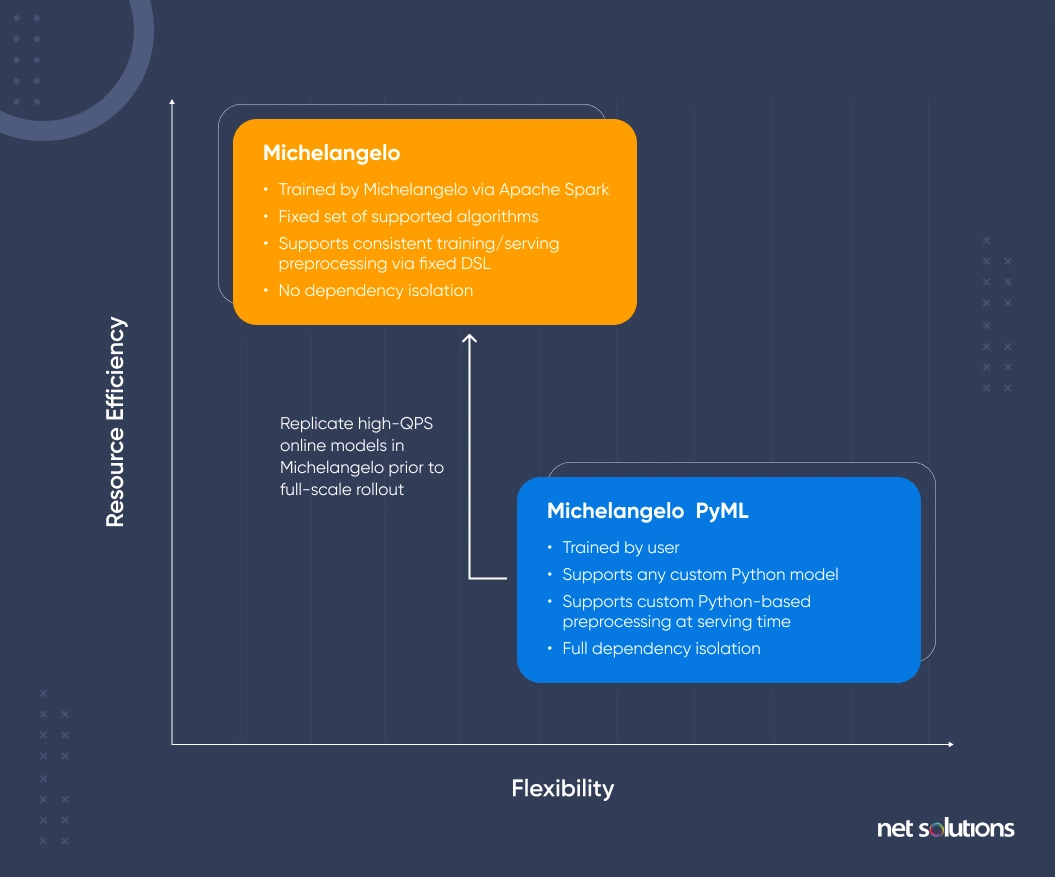
Uber built an ML platform using Python called Michelangelo PyML (an extension of the initial Michelangelo product). This platform enables them to make predictions, both in online and offline mode, thereby solving day-to-day tasks. Users can validate models with PyML and replicate them in Michelangelo for complete efficiency and scalability.
Python has many libraries that are powerful as compared to libraries provided by PHP. These libraries include assistance in all domains, including NLP (Natural Language Processing), image processing, and many others.
5. Scalability
When products succeed, businesses grow, and as the company sees an upward trajectory, its user base grows too. In this case, it is a priority for any business to have an application that easily adapts to the rapidly changing customer and market demands. Thus, choosing an app development technology that can help your business scale up is essential.
In terms of scalability, the apps built on the Python framework offer high AI and ML capabilities, leading to increased scalability and easy adaptation to evolving trends.
For instance, using the Django framework, you can build scalable apps as this framework constitutes a series of wired-up and ready-to-go components that are decoupled (implies independent from each other). Thus, these components can be unplugged and replaced per the business’s varying demands.
Instagram, for instance, features the world’s largest deployment of the Django web framework. The social networking service credits its decision to pick Python over PHP to the former’s reputation for simplicity and practicality.
Even when Instagram has doubled in size and felt the need to maximize its web service efficiency, Django has helped maintain simplicity and practicality and scaled to handle millions of users.
On the contrary, PHP is less open to growing demands and new trends. Despite its continual improvement, PHP lags behind Python apps, thus losing the ‘Python vs PHP: Scalability’ battle.
6. Ease of Installation
PHP is easy to install, whether you want to install it on Windows, MacOS, and macOS. Also, it can seamlessly run on all these operating systems. You can even find it on many shared hosting websites worldwide for a minimal fee.
While LinkedIn users can easily install Python, installing the language on Mac OS X and Windows is complicated. The Mac OS X comes preinstalled with Python, which is so outdated that you can’t use it for application development. As a result, you have no choice but to install a new Python version.
Installing Python on Windows is equally tricky. You must use a package manager like Chocolatey to overcome this and avoid issues. However, it is extra work, especially if you plan to use Python as a team.
Verdict: PHP is easier to install on each operating system than Python.
7. Web framework options
Both PHP and Python offer various frameworks for web application development. Common PHP frameworks are Laravel, CodeIgniter, Symfony, and Zend. Laravel, Symfony, and CodeIgniter are widely used because of their rich performance, high scalability, and minimal configuration requirements.
Django, Flask, CubicWeb, Bottle, Pyramid, TurboGears, and Pylons are popular python frameworks. Django and Flask are widely used because of their ease of use and rich features.
Verdict: Both PHP and Python support various web frameworks. Hence, there is a tie in the PHP vs. Python tug of war-regarding web frameworks.
8. Environment Management
Environment management plays a critical role in web application development by offering a controlled and stable development environment for each phase of the application’s lifecycle. It improves collaboration, speeds up development and testing, reduces downtime, enhances security, and successfully delivers high-quality web applications.
virtPHP is the environment manager for PHP. However, it was archived a long time ago. A better option is containers like Docker and Kubernetes, which developers can use to run a software process, a small microservice, or even an extensive application. A container also offers advantages like
- Reduced overhead,
- Consistent operation,
- Increased portability,
- Improved efficiency
On the other hand, Python uses the Virtualenv environment manager, which is highly efficient and valuable for environment management. Using it, you can install and manage multiple Python versions side-by-side. You can even switch versions quickly. Also, Virtualenv is highly popular among developers with 10+ years in the market.
Verdict: Python is the clear winner in terms of environmental management.
9. Debugging
Debugging is tricky in PHP. However, with PHP debuggers like XDebug, you can quickly get along with it. Similarly, Python has a brilliant debugger called Python Debugger (PDB) that is easy to use, especially if you’re a beginner. All you need is to press the debug button, and you can get rid of bugs in a few seconds.
PHP and Python debuggers like PyCharm and Visual Studio Code also allow integration with IDE – allowing you to track and fix issues seamlessly.
Verdict: Both PHP and Python debuggers are easy to use. Hence, it’s a tie.
10. Developer Community & Support
Since PHP has been around longer and has a large user base, many online documentation, tutorials, and forums are available. Also, the PHP community manages many open-source projects, libraries, and frameworks. They’re also always ready to help and share their knowledge with others.
On the other hand, Python has a younger but rapidly growing community. The language has become famous recently due to its simplicity, versatility, and efficiency in domains like data science, machine learning, and web development.
The Python community has significantly contributed to the development of many open-source projects, libraries, and frameworks over recent years. You can also find many online resources and forums for Python. If there’s anything you still can’t grasp, you can reach out to its welcoming and supportive developer community.
Verdict: Both PHP and Python have strong and active communities that offer great support. You can easily find websites and platforms to ask questions, hone your skills, or find solutions to any problems with web application development.
11. Documentation
Both PHP and Python have comprehensive documentation. You can easily find forums, tutorials, discussion boards, websites, and courses for both languages to aid in software development.
PHP even has a documentation website covering everything you need to know about the programming language in over 10 languages. Developers can leave comments on each page to clarify complex concepts with easy examples.
The downside of this feature is that comments, once posted, remain there forever. Hence, comments related to previous versions sometimes show on top, creating confusion. As a result, developers fail to understand what issues have been addressed and what they’re still working on.
Python also has in-depth documentation for each version with a table of contents, new improvements, usage, tutorials, FAQ section, extensions, library references, etc. Also, you don’t see the comments as you did in this documentation – which avoids the confusion but makes it slightly challenging to understand some concepts for new developers.
Verdict: Python documentation is more organized than PHP, as the user comments create a lot of confusion.
Similarities between PHP and Python
- Python and PHP are open-source, meaning you can use, distribute, and modify them for free.
- Both languages are cross-platform, so you can run them on different operating systems.
- Python and PHP enjoy active community support from developers who are always willing to help you with your queries.
- The code of both languages is executed line-by-line without compiling.
- PHP and Python are high-level programming languages supporting method chaining and dynamic typing.
PHP vs. Python: the differences
| Parameter | PHP | Python |
|---|---|---|
| Type of Programming language | PHP is a scripting language for developing web applications. | Python is a general-purpose programming language. |
| Learning curve | PHP is a bit more challenging to learn than Python. | You can easily learn Python. Even beginners can easily get along with it. |
| Popular Frameworks | Laravel, CodeIgniter, Symfony, CakePHP, Zend, Yii. | Flask, Django, Pyramid, Web2Py, Bottle, Tornado, TurboGears. |
| Speed | PHP 7. x and PHP8 are extremely fast, almost 3x faster than Python. | Python is fast and can help develop apps quickly. |
| Database Connectivity | You can seamlessly connect 25+ databases in PHP. | Python allows database connectivity, but not with all databases. Also, it needs drivers to connect with databases. |
| Syntax | PHP syntax is complex | Python syntax is clear and crisp. |
| Library Support | PHP lacks wider library support. | Python offers vast library support for all types of web applications. |
| Popularity | Very popular (around 79% of websites use PHP) | Lest than 1% of websites on the Internet use Python. |
| Readability | PHP is less readable, and maintainable | Python is highly readable and easy to maintain as it was designed to reduce complexities. |
| Functional Programming | PHP does not support functional paradigms. | Python supports functional programming methods. |
| Security | PHP security is a matter of concern, as many security attacks have been witnessed in the past. | Python is secure as it has built-in cybersecurity features. |
| Usage | PHP is mostly for web application development. | Python has broader functions like web and app development, data analytics, AI, and machine learning. |
| Websites built | Facebook, Yahoo, Wikipedia, and WordPress. | YouTube, Instagram, Dropbox, Uber, Quora, Pinterest, and Spotify. |
| GitHub Starts & Forms | 30K Stars & 8.04 Forks | 30.04K Stars and 8.23K Forms |
How Net solutions can Help in Building High-quality Web Applications?
The success of every business lies in robust, high-performing, and user-centric web applications that focus on solving customer’s pain points and maximizing user engagement. Creating such apps is possible only if you’ve a reliable PHP and Python web development services provider who can offer you the right help and guidance throughout the development process.
Net Solutions can help you maximize your reach and engagement with scalable web application development. Contact us if you’re looking to build a new web app or website for your business.
Frequently Asked Questions
What should be included in the application modernization strategy?
PHP is a simple programming language, so you can quickly learn its basics. However, mastering it takes time, practice, and dedication.
What is the most crucial aspect of starting with an application modernization solution?
Sometimes, you can use Python to replace PHP for web development. For example, you can use Python to build web applications using frameworks such as Django or Flask. These frameworks function similarly to PHP frameworks like Laravel or CodeIgniter. Also, you can use Python to build web services and APIs, which PHP applications can use.
Why is PHP not used by some big companies?
- Since PHP was designed for small-scale web applications, it can be challenging for some companies to scale PHP web applications to handle high traffic and a large amount of data.
- PHP had some security issues in the past. Hence, some companies prefer using Java and C# in their place as they’re more secure.
- PHP is fast but less efficient than other programming languages, especially when handling extensive data and complex architecture.
- Some big companies use legacy systems built on older technologies like Java or .NET and may find switching to a new language like PHP challenging.
Should I Learn PHP or Python First?
- If your goal is to develop web applications, you should learn PHP first.
- If you’re into data science and machine learning, you should learn Python first.
- If you’re a beginner looking to learn a new language, you should choose Python as it is easy to understand and has a less steep learning curve.