
Как удалить данные из таблицы sql
Для удаления применяется команда DELETE :
DELETE [FROM] имя_таблицы WHERE условие_удаления
Например, удалим строки, у которых id равен 9:
DELETE Products WHERE >Или удалим все товары, производителем которых является Xiaomi и которые имеют цену меньше 15000:
DELETE Products WHERE Manufacturer='Xiaomi' AND Price < 15000
Более сложный пример - удалим первые два товара, у которых производитель - Apple:
DELETE Products FROM (SELECT TOP 2 * FROM Products WHERE Manufacturer='Apple') AS Selected WHERE Products.Id = Selected.Id
После первого оператора FROM идет выборка двух строк из таблицы Products. Этой выборке назначается псевдоним Selected с помощью оператора AS. Далее устанавливаем условие, что если Id в таблице Products имеет то же значение, что и Id в выборке Selected, то строка удаляется.
Если необходимо вовсе удалить все строки вне зависимости от условия, то условие можно не указывать:
Команда SQL для удаления и обновление данных в базе (DELETE, UPDATE)
В базу данных можно не только добавлять данные, но и удалять их оттуда. Ещё существует возможность обновить данные в базе. Рассмотрим оба случая.
Удаление данных из базы (DELETE)
Удаление из базы данных происходит с помощью команды "DELETE" (переводится с английского как "УДАЛИТЬ"). Функция удаляет не одну строку, а несколько, при этом выбирает для удаления строки по логике функции "SELECT". То есть чтобы удалить данные из базы, необходимо точно определить их. Приведём пример SQL команды для удаления одной строчки:
DELETE FROM `USERS` WHERE `ID` = 2 LIMIT 1;Благодаря этому запросу из таблицы "USERS" будет удалена одна запись, у которой в столбце "ID" стоит значение "2".
Обратите внимание, что в конце запроса стоит лимит на выборку "LIMIT 1;" размером в 1 строку. Его можно было не ставить, если поле "ID" является "PRIMARY KEY" (первичный ключ, то есть содержит только уникальные значения). Но всё-таки рекомендуем ставить ограничение "LIMIT 1;" в любом случае, если вы намерены удалить только одну строчку.
Теперь попробуем удалить сразу диапазон данных. Для этого достаточно составить запрос, в результате выполнения которого вернётся несколько строк. Все эти строки будут удалены:
DELETE FROM `USERS` WHERE `ID` >= 5;Этот запрос удалит все строки в таблицы, у которых в столбце "ID" стоит значение меньше 5. Если не поставить никакого условия "WHERE" и лимита "LIMIT", то будут удалены абсолютно все строки в таблице:
DELETE FROM `USERS`;На некоторых версиях MySQL способ удаления всех строк через "DELETE FROM _;" может работать медленнее, чем "TRUNCATE _;"; Поэтому для очистки всей таблицы лучше всё-таки использовать "TRUNCATE".
Обновление данных в базе (UPDATE)
Функция обновления "UPDATE" (переводится с английского как "ОБНОВИТЬ") довольно часто используется в проектах сайтов. Как и в случае с функцией "DELETE", фкнция обновления не успокоится до тех пор, пока не обновит все поля, которые подходят под условия, если нет лимита на выборку. Поэтому необходимо задавать однозначные условия, чтобы вместо одной строки нечаянно не обновить половину таблицы. Приведём пример использования команды "UPDATE":
UPDATE `USERS` SET `NAME` = 'Мышь' WHERE `ID` = 3 LIMIT 1;В этом примере, в таблие "USERS" будет установлено значение "Мышь" в столбец "NAME" у строки, в столбце "ID" которой стоит значение "3". Можно обновить сразу несколько столбцов у одной записи, передав значения через запятую. Попробуем обновить не только значение с толбце "NAME", но и значение в столбце "FOOD" используя один запрос:
UPDATE `USERS` SET `NAME` = 'Мышь', `FOOD` = 'Сыр' WHERE `ID` = 3 LIMIT 1;Если не поставить никаких лимитов LIMIT и условий WHERE, то все записи таблицы будут обновлены без исключений.
Оператор DELETE стр. 1
Оператор DELETE удаляет строки из временных или постоянных базовых таблиц, представлений или курсоров, причем в двух последних случаях действие оператора распространяется на те базовые таблицы, из которых извлекались данные в эти представления или курсоры. Оператор удаления имеет простой синтаксис:

Если предложение WHERE отсутствует, удаляются все строки из таблицы или представления (представление должно быть обновляемым). Более быстро эту операцию (удаление всех строк из таблицы) можно в Transact-SQL (T-SQL) — процедурное расширение языка SQL, используемое для программирования на стороне сервера в Microsoft SQL Server и Sybase ASE. Transact-SQL также выполнить с помощью команды
Однако есть ряд особенностей в реализации команды TRUNCATE TABLE , которые следует иметь в виду:
- не журнализируется удаление отдельных строк таблицы; в журнал записывается только освобождение страниц, которые были заняты данными таблицы;
- не отрабатывают триггеры, в частности, триггер на удаление;
- команда неприменима, если на данную таблицу имеется ссылка по внешнему ключу, и даже если внешний ключ имеет опцию каскадного удаления.
- значение счетчика ( IDENTITY ) сбрасывается в начальное значение.
Требуется удалить из таблицы Laptop все портативные компьютеры с размером экрана менее 12 дюймов.
Все блокноты можно удалить с помощью оператора
Transact-SQL расширяет синтаксис оператора DELETE , вводя дополнительное предложение FROM :
При помощи источника табличного типа можно конкретизировать данные, удаляемые из таблицы в первом предложении FROM .
При помощи этого предложения можно выполнять соединения таблиц, что логически заменяет использование подзапросов в предложении WHERE для идентификации удаляемых строк. Поясним сказанное на примере.
Пусть требуется удалить те модели ПК из таблицы Product, для которых нет соответствующих строк в таблице PC.
Используя стандартный синтаксис, эту задачу можно решить следующим запросом:
Заметим, что предикат type = 'pc' необходим здесь, чтобы не были удалены также модели принтеров и портативных компьютеров.
Эту же задачу можно решить с помощью дополнительного предложения FROM следующим образом:
Здесь применяется внешнее соединение, в результате чего столбец PC.model для моделей ПК, отсутствующих в таблице PC, будет содержать NULL -значение, что и используется для идентификации подлежащих удалению строк.
| Страницы: | 1 | 2 | 3 |
The Best Way To Learn SQL: an Easy Way to Learn
Wondering what's the best way to learn SQL? Find helpful tips on how to learn SQL by reading this guide. Discover the best way to learn SQL for you!
Last Updated: December 27, 2022

SQL, or Structured Query Language, isn't like most other programming languages. Instead of being flexible and versatile with several use cases - like Python or Java for example - SQL has very clear-cut uses. SQL is used solely for accessing and manipulating databases. This means that if you want to become some sort of database administrator or data analysis expert, you need to figure out the best way to learn SQL.
Don't worry though, you're not alone. Data collection and analysis is becoming more and more common, and most media to large businesses have databases in some form or another. The data in these databases is analyzed to inform marketing and business strategy decisions, which has led to a huge demand for experienced SQL programmers.
Some of the best-recommended ways to learn are taking SQL-based courses on platforms like DataCamp. However, today, I'll introduce you to more strategies that you can add to your studying plan.
So how can you become an expert in SQL?
Table of Contents
- 1. What's The Best Way To Learn SQL?
- 1.1. Which Online Courses Should You Choose?
- 1.2. How Do I Choose An Online Course?
- 2. How Long Does It Take To Learn SQL?
- 3. What Other Resources Can I Use To Complement My Learning?
- 3.1. Language Reference Guides
- 3.2. YouTube Videos
- 3.3. Forums
- 4. What Else Should I Learn Alongside SQL?
- 4.1. Different Databases
- 4.2. PHP
- 4.3. Learn How To Create A Database
- 5. So, What is The Best Way to Learn SQL?
- 5.1. 1. Practice Is The Key To Success
- 5.2. 2. Choose Courses Carefully
- 5.3. 3. Don't Be Scared To Ask For Help
- 6. Start now and stack your experience
What's The Best Way To Learn SQL?
The best way to learn SQL is through practice. Now, how you will start learning it can be a different story and it depends on your learning style, on the amount of time and money you have to commit to learning, and on your end goals. In general, the most common way to start learning SQL for most people will be through an online course.
Latest DataCamp Coupon Found:
Verified Staff Pick
GET 50% OFF
DataCamp Black Friday Sale
During this DataCamp Black Friday, you can access the top-rated courses with a 50% discount. Enrol now for way less!
Expiration date : 26/11/2023
4,834 People Used
Only 74 Left
Verified Staff Pick
Have you ever wondered which online learning platforms are the best for your career?
GET 50% OFF
DataCamp Black Friday Sale
During this DataCamp Black Friday, you can access the top-rated courses with a 50% discount. Enrol now for way less!
Your Discount is activated!
Expiration date : 26/11/2023
4,834 People Used
Only 74 Left
Verified Staff Pick
Have you ever wondered which online learning platforms are the best for your career?
GET 50% OFF
DataCamp Black Friday Sale
During this DataCamp Black Friday, you can access the top-rated courses with a 50% discount. Enrol now for way less!
Your Discount is activated!
Expiration date : 26/11/2023
4,834 People Used
Only 74 Left
Which Online Courses Should You Choose?
When you break down the pros and cons of the various methods of teaching programming, online courses come out on top by a huge margin. Programming with any language - including SQL - is done with a computer, so it makes sense to learn how to use SQL via an online course, instead of using textbooks or offline learning techniques.
A few of the other benefits of learning online, proving, that it's one of the best ways to learn SQL and more, include:
- Online courses are usually clear and concise. This means that you won't be wasting time trying to learn things that you don't need to. Instead, you will get straight to the point, learning the concepts and information that you need. This will save you time and will help you learn SQL much faster and more efficiently.
- They offer flexibility. The structure of most online courses means that they are perfect for a flexible learner. Instead of having to attend scheduled classes and learn according to a strict course outline, you will be able to learn when you want, for as long as you want, as often as you want. This flexibility is great for people with disabilities, for people with children, or for people who have to work full time and therefore can't attend physical courses.
- They let you learn at your own pace. This is great for people who haven't tried to learn a new skill for a long time. Being able to learn at your own pace means that you should be able to learn all the skills you need to become a SQL superstar, even if it takes you longer than the average person.
- They are usually very affordable. Online courses are the best way to learn SQL free. Even if you can't find free SQL training that you like, there are plenty of online courses out there that only cost a few dollars to enroll in. And if you don't have even those few dollars, there are also scholarships to get course fees funded to apply for.
While it can sometimes seem difficult to navigate your steps and transition from the beginner level to a more difficult one, some platforms offer series of courses that each you everything in order of development. Take the SQL Fundamentals skill track on DataCamp for example – it starts at complete basics and starts introducing more intermediate concepts as you learn.
How Do I Choose An Online Course?
It's very important to choose a course that teaches accurate and up to date information in a clear, efficient manner: after all you are looking for the best way to learn SQL online. If you choose a poor quality course, you could find yourself missing out on important information and learning things that are useless in the modern world. When choosing an online SQL course, consider the following:
The Reputation of the Course Provider
When you're choosing an online course - for anything - you need to look closely at the reputation of the person or business who is providing the course. Try and find courses that are created by people with a strong reputation. This will increase your chances of choosing a high-quality course. To make your decision easier, feel free to examine our list of the best MOOC providers, which includes names like DataCamp and Udacity.
Past Reviews
Another essential factor when it comes to choosing the right online SQL course is the experiences of past students. Past reviews are a major factor that you should base your choice on. Try and find a course with at least 90% positive ratings, and make sure you pay attention to written reviews as well. Don't forget that you can add your voice to the reviews too – all our tutorials and guides allow you to leave a rating in the comment section.
Consider the Course's Content
You should also pay close attention to what the course claims to teach and make sure that it fits what you want to learn. For example, the Interactive SQL Tutorial will teach you the basics of SQL coding, databases, and other important concepts without going into too much detail. On the other hand, a course like the Ultimate PHP and MySQL Course teaches more in-depth information about using PHP and SQL together to interact with and manipulate databases.
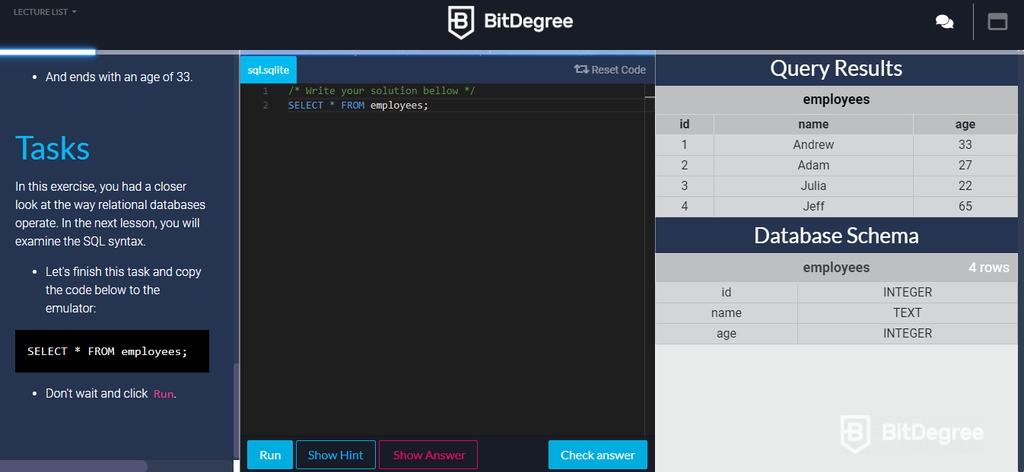
Are you looking for a more general introduction or do you want to work with more niche topics? The difficulty of the subject may come in question here. For example, it's recommended to complete the free Introduction to SQL course on DataCamp before you jump into someting more specific, like PostgreSQL Summary Stats.
The Most Liked Findings
Looking for more in-depth information on related topics? We have gathered similar articles for you to spare your time. Take a look!

What is Data Literacy, and Why is It Important for Your Business?
What is data literacy: definition, importance, best data literacy training programs, and much more.

How to Learn AI From Scratch: Top 5 AI Courses
Find out how to learn AI efficiently and why you should do so.

Where to Learn ChatGPT: A Simple Guide to AI
Find out where to learn ChatGPT and how this tool took the internet by a storm.
How Long Does It Take To Learn SQL?
One of the most common questions people ask when looking for the best way to learn SQL is "How long does it take to learn SQL?". In reality, the answer to this question will vary according to the type of course you take and how regularly you practice. After all, the more you practice, the better you will understand how SQL works.
To give you a more quantifiable answer, the average person can learn the basics of SQL in a couple of days by working through an online course. Deeper concepts might take a few weeks to develop, but it's well and truly possible to be writing SQL code a mere few months after your first course.
What Other Resources Can I Use To Complement My Learning?
Although online courses are the one of the best places to start when you're trying to work out how to learn SQL, there are plenty of other resources you should discover as well. Some of the resources that complement online courses include:
Language Reference Guides
Reference guides are extremely useful tools that you should start getting familiar with at the start of your studies. They outline everything about a programming language, including syntax, concepts, and coding best practices: practicing is the best way to learn SQL, after all. SQL reference guides are numerous, and the best one for you will depend on the types of databases that you're working with and what you're doing with them. However, the Oracle SQL Database reference is a great guide to start with while you're learning.
Table: Learning process on DataCamp VS BitDegree
DataCamp offers its users SQL Cheat Sheets. These resources give you easy access to the essentials of SQL. In addition to the default information, you'll also find some hacks to make your coding experience faster, as well as tricks used by experts in the field.
BitDegree also provides a comprehensive SQL language guide/tutorial. While formatted differently to most other reference guides, this document provides simple, easy to understand answers to pretty much everything related to SQL. Head over to the Learn SQL page to discover more.
YouTube Videos
Have you ever run into a problem with something, only to find the answers in a short online video? Well, programming is no different. When you run into problems with your code or are having trouble doing something, then you should get in the habit of heading over to YouTube and finding a video that helps you. Videos also provide great free SQL training for people who want to go above and beyond the requirements of their course.
Forums
Online SQL forums and chat boards are great places for programming beginners to find answers to their questions. They also allow you to network with your fellow programmers, to hone your skills by helping other people, and to pick up useful bits of knowledge from more experienced SQL coders. One of most popular forums that offer a lot of help while looking for the best way to learn SQL is Stack Overflow, but a quick internet search will turn up a whole lot more.
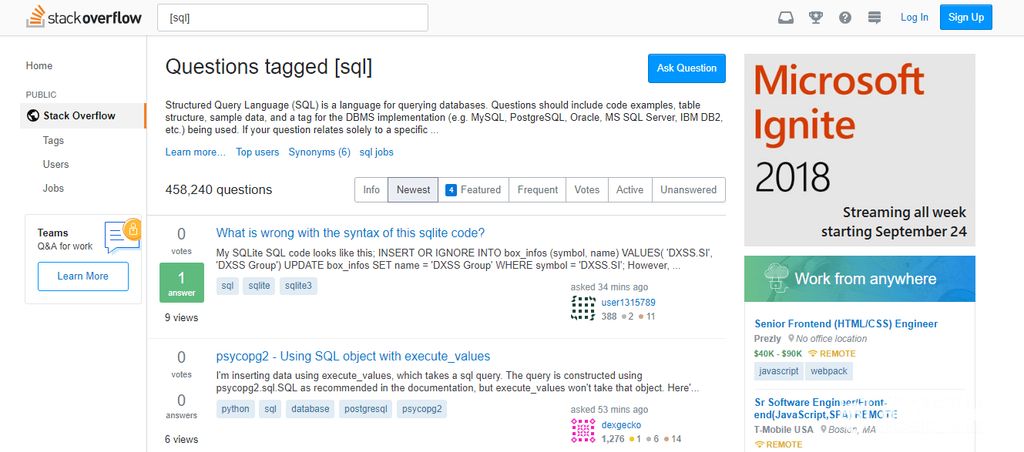
As a DataCamp user, you can access the community boards. Here, you can connect to other learners and discuss any issues that may arise as you study and work on projects. Additionally, you're able to make threads in foreign languages, so your peers can help you if some of the English content is trickier to figure out.
What Else Should I Learn Alongside SQL?
If you're serious about discovering how to learn SQL and building a career as a database manager, you need to learn a few other things alongside the SQL language. Different tools and databases are used to make your life as a SQL programmer easier, and it's important to get familiar with them early. Some of the things you should learn to complement your SQL knowledge include:
Different Databases
There is a huge number of different types of databases out there. Some websites use their databases, and some use popular third part database structures. Some of the most popular databases that you should consider learning about include MySQL, Sybase, IBM DM2, and Oracle. A quick Google search will reveal a wealth of information about each of these, so get learning!
PHP
PHP is a whole new programming language, but it is extremely useful when it comes to working with SQL. Databases like MySQL are designed to store huge amounts of data. SQL is used to access, modify, and analyze this data, while PHP is used to represent the data - on a website for example. If you would like to find out more about the relationship between PHP and MySQL have a look at the Ultimate PHP and MySQL course.
Learn How To Create A Database
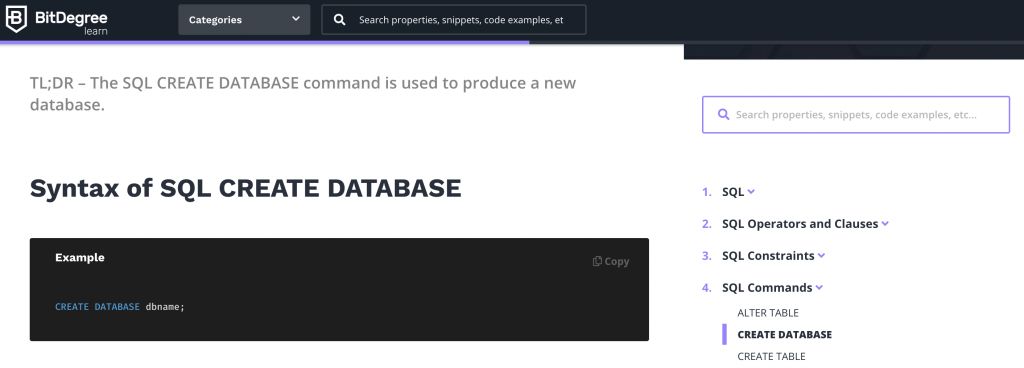
Although online courses are probably the best way to learn SQL basics, creating and experimenting with your database is probably the best way to learn SQL advanced techniques. Creating your database isn't easy, but it's an extremely valuable skill that you will find useful throughout your programming career. The Learn SQL Tutorial page provides more information about creating your database.
So, What is The Best Way to Learn SQL?
Now that you know how to learn SQL, it's time for me to give you a few methods to help you get started. When you're starting to learn SQL, keep the following in mind:
1. Practice Is The Key To Success
There is no such thing as too much practice when it comes to figuring out the best way to learn SQL. I would recommend practicing every single day if you can. Doing this will help reinforce important concepts and should help you become fluent in SQL faster.
2. Choose Courses Carefully
Sure, some free courses and other free learning resources are great, but a lot of them are poor quality. If you're trying to learn SQL free online, you will need to spend a fair bit of time researching your courses to make sure you find a good one. If you don't, you might find yourself learning incorrect or poor quality information. You might skip over important concepts, and this could harm your future career prospects as a SQL developer.
Pros
- Easy to use with a learn-by-doing approach
- Offers quality content
- Gamified in-browser coding experience
Main Features
- Free certificates of completion
- Focused on data science skills
- Flexible learning timetable